
It's breeding season at Jollity Farm, which means we're already planning for next year's baby goats. Yes, we're thinking about baby goats in October. That's farm life for you!
So far, we've bred 17 of our senior does, and we're just getting ready to start round two. We're spreading things out a bit this year because, as much as we love baby goats, there's only so much kid storm a person can handle at once.
And believe me, we know what a kid storm looks like.
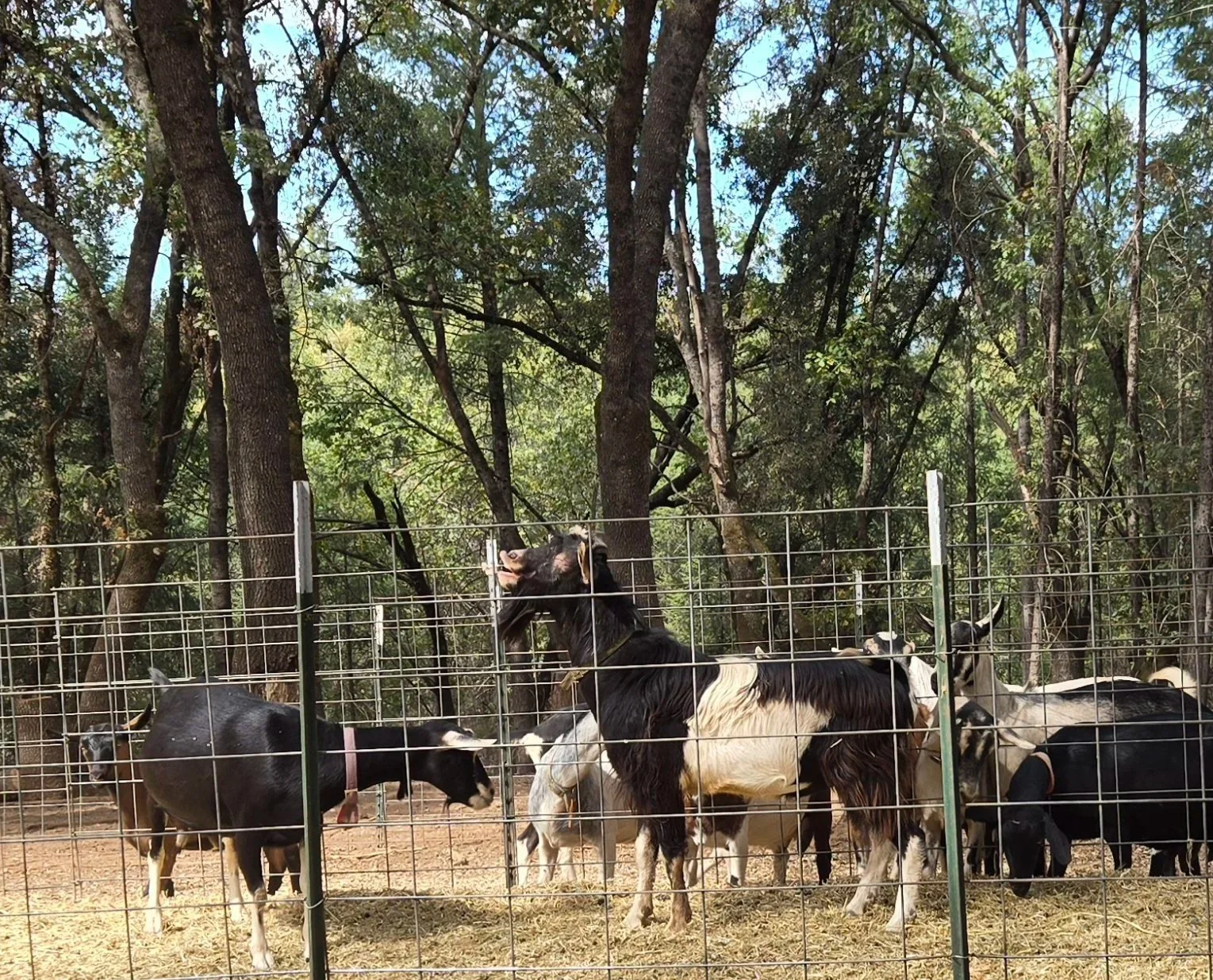
Seventeen does, one very busy spring
Our first group of girls is due between February 24 and March 1, 2027. If all goes according to plan, we'll have a whole lot of tiny hooves hitting the ground in a very short window.
The lucky ladies in this first round are:
Charlotte, Peridot, Poppy, Surprise, Granite, Kate, Zygoat, Peppermint, Pyrite, Amelia, Dulcinea, Ruby, Samsonite, Claire, Quartz, Garnet, and Indigo.
Of course, goats don't consult our calendars before deciding when to have their babies. A goat's pregnancy lasts about 150 days, give or take five days. So we'll have a general idea of when to expect kids, but the girls will have the final say.
We're about to start breeding the next group of senior does, with round two beginning around March 19. Spreading out the breeding season means spreading out the kidding season, too. We're hoping for a little more breathing room when all those babies start arriving.
Because here's the thing: we love kidding season, but it is WORK. There are babies to catch, dry off, feed, monitor, and generally fuss over. There are moms to watch and plenty of things that can happen when you're working with live animals.
A little breathing room sounds pretty wonderful.
Meet Yosemite Sam, our yearling girls' date
After we finish breeding our senior does, we'll take another short break before it's time to breed the yearlings in December.
Those young ladies will be paired with our Nigerian Dwarf buck, KICKAPOO CREEK JC YOSEMITE SAM but we just call him Yosemite.
Yes, he is a bit of a character.
We have two reasons for breeding our yearlings to a Nigerian Dwarf buck. First, we're hoping for smaller kids, which can mean an easier first delivery for a young doe. Fingers crossed! Of course, nature doesn't offer guarantees, but we like to give our girls a little help where we can.
The second reason is a little more practical: it helps us resist the temptation to keep their babies.
I know, I know. Baby goats are ridiculously adorable. But we have to keep our eyes on what we're trying to accomplish here.
Cute kids are lovely. Good milkers are the goal.
At Jollity Farm, our focus is milk production. We don't keep a doe's offspring just because they're cute or because we love their mama. First, we need to see what she can do on the milk stand.
A doe has to prove herself as a milker before we'll consider keeping a replacement from her in future years. If her production meets our expectations, then we'll look at keeping a daughter down the road.
That means the kids from our yearling girls will be sold as pets. They'll be adorable Mini Nubians and Mini Alpines, ready to go charm somebody else's family.
It's one of those decisions that makes perfect sense when you're looking at the long-term goals of a dairy, even if it's a little hard to resist a particularly cute baby with floppy ears.
Even dairy farmers need a winter break
Ideally, we'd milk every doe for a full 365 days after she freshens (that's the dairy term for giving birth and starting her next lactation). In reality, running a farm doesn't always work out quite so neatly.
We have to balance milk production with the realities of caring for the animals, making cheese, making soap, and keeping the rest of the farm running. And, well, we need a break, too.
These days, we generally wind down milking around the winter solstice and start up again when the first girls kid in late winter.
The goats get a rest, we get a little breathing room, and everyone gets to recharge before the next busy season.
Then the cycle begins again: babies, milk, cheese, soap, and all the everyday adventures that come with running a farm.
For now, we're getting ready for round two of breeding season and looking ahead to February. It may be autumn, but at Jollity Farm, we're already counting down to Kid Storm 2027.
Wish us luck. We'll need it!